

For more than a century, Woodland Christian Church (Disciples of Christ) has stood at the heart of Lexington’s east end—rooted in a movement that began on the Kentucky frontier and continues to grow in faith, freedom, and community service today.
A Movement Born on the Frontier
Our story begins not in Lexington, but a few miles northeast, at Cane Ridge, outside Paris, Kentucky. There, in 1801, a remarkable revival swept through the frontier, led by Barton W. Stone, whose passion for unity and faith in the power of ordinary believers inspired thousands. Rejecting rigid dogma, Stone and his followers left the Presbyterian Church to form what became known simply as the Christian Church.
The movement’s defining principle—
“In essentials, unity; in opinions, liberty; in all things, love”—
remains a guiding light for Woodland Christian Church today.
When Stone joined forces with Alexander Campbell and his followers in 1832, the new union, known as the Christian Church (Disciples of Christ), helped shape the spiritual landscape of a growing nation. The early Disciples emphasized intellectual freedom, lay participation, and an open invitation to all who sought to follow Christ without the barriers of creed or hierarchy.
A Church for a Growing Lexington
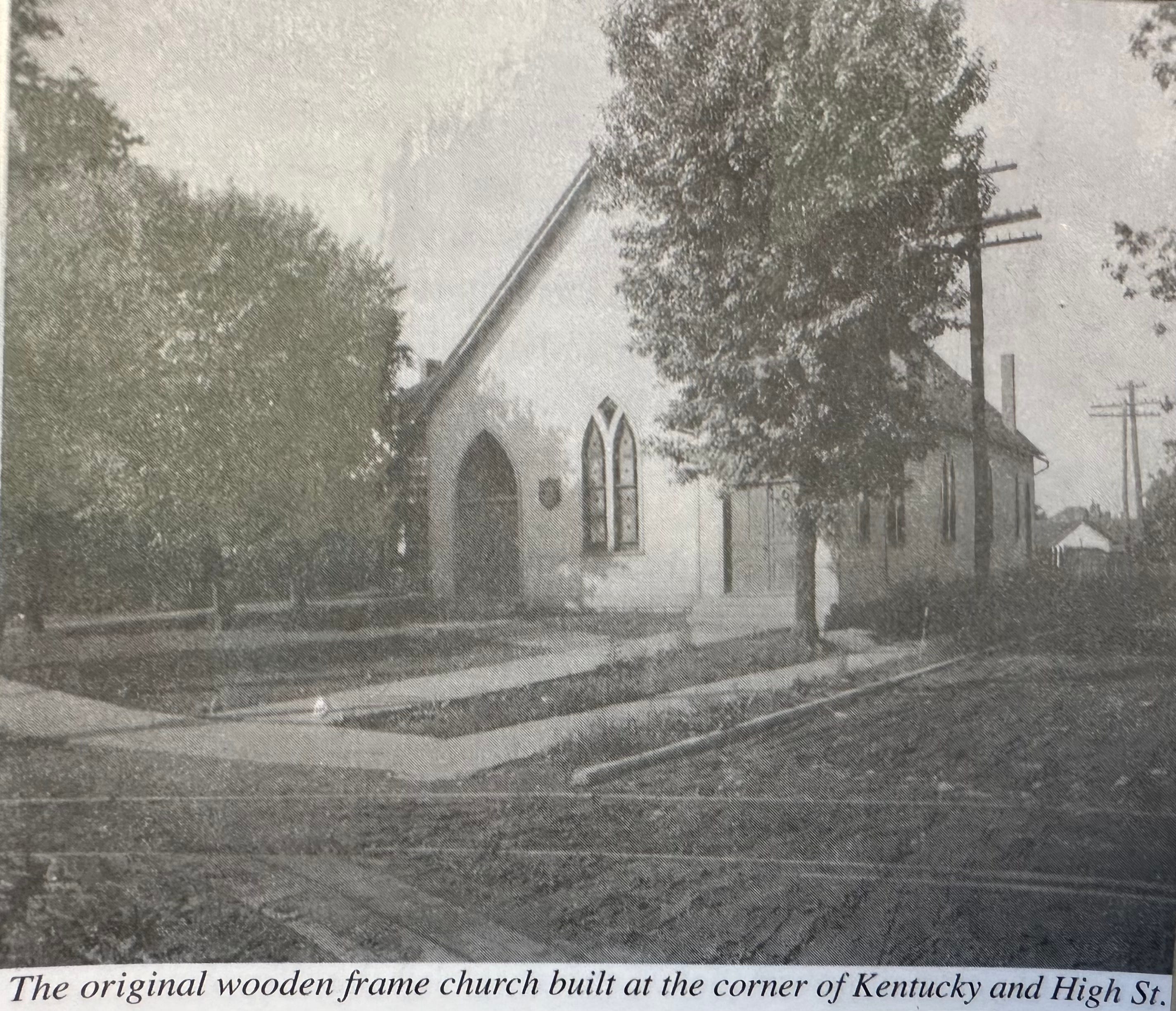
By 1907, Lexington was expanding rapidly eastward. Seven established Christian Church congregations recognized the need for a new church in the thriving Woodland neighborhood. Together, they founded Woodland Christian Church, gathering first in the City Auditorium at Woodland Park before erecting their own modest frame building that seated 300.
The Woodland district reflected the vibrant energy of early 20th-century Lexington—home to merchants, doctors, contractors, and horsemen. From its beginnings, Woodland embraced a spirit of partnership with the city around it, sharing resources with local schools and organizations. When Jefferson Davis Elementary, a segregated school, burned in the 1920s, Woodland opened its doors to displaced students and later shared its space with Temple Adath Israel after a fire destroyed their synagogue. These early acts of hospitality and solidarity set the tone for the church’s enduring commitment to inclusion and service.
Education and Freedom of Thought
As part of the Disciples of Christ tradition, Woodland shares in a rich legacy of supporting higher education and critical inquiry. The denomination supported the development of Transylvania University, the University of Kentucky, and Lexington Theological Seminary, institutions that continue to shape Kentucky’s intellectual life. True to Disciples principles, these schools—and the church itself—have always valued inquiry over indoctrination. Faith and learning, side by side, have long defined Woodland’s ministry.
Speaking Out for Justice
Throughout its history, Woodland Christian Church has not shied away from moral clarity. In 1951, when Lexington faced a public gambling scandal that rocked the community, the church board passed a formal resolution commending law enforcement for their efforts to “stamp out the crime of gambling and other lawless acts against society.” It was a small but powerful act of civic responsibility—an early example of Woodland’s willingness to stand for ethical reform and community integrity.
In 1979, Woodland joined a national effort to eradicate hunger by launching God’s Pantry – Crisis Food Center, headquartered in the church’s house next door. During the Pantry’s early years, the congregation hosted the Concerts to End Hunger, harnessing the power of music to bring the community together around compassion and action. God’s Pantry would grow into one of Kentucky’s leading hunger relief organizations—its roots firmly planted in the soil of Woodland Christian Church.
Embracing Equality and Inclusion
In the late 20th century, Woodland became a leader once again—this time within its own denomination. When the regional Disciples of Christ body prohibited the ordination of gay and lesbian clergy, Woodland spoke up. The congregation formally challenged the rule in 1978, and decades later, in 2011, with only one dissenting vote, Woodland declared itself Open and Affirming, becoming just the third congregation in Kentucky to do so.
This public affirmation of LGBTQ+ equality reflected Woodland’s long-held belief that every person is created in God’s image and deserving of full dignity and belonging. When the Disciples of Christ region officially removed barriers to ordination in 2011, Woodland’s prophetic stance had helped pave the way.
Preserving Heritage, Building the Future
As the 21st century unfolded, Woodland again faced a defining moment. Decades of deferred maintenance had left the historic church building in serious need of repair—more than $1 million worth. But where others might have seen decline, Woodland saw opportunity.
The roots of that opportunity stretched back to 1976, when the church purchased the Prather property next door—a vacant lot and historic 1870s house—“for possible further development.” Though the house could not ultimately be saved, the congregation’s foresight preserved the land for future ministry. The lot became home to neighborhood gatherings, art fairs, and community events—most notably the Woodland Christian Church Art Fair, and later, the Kentucky Art Market, the church’s largest fundraiser.
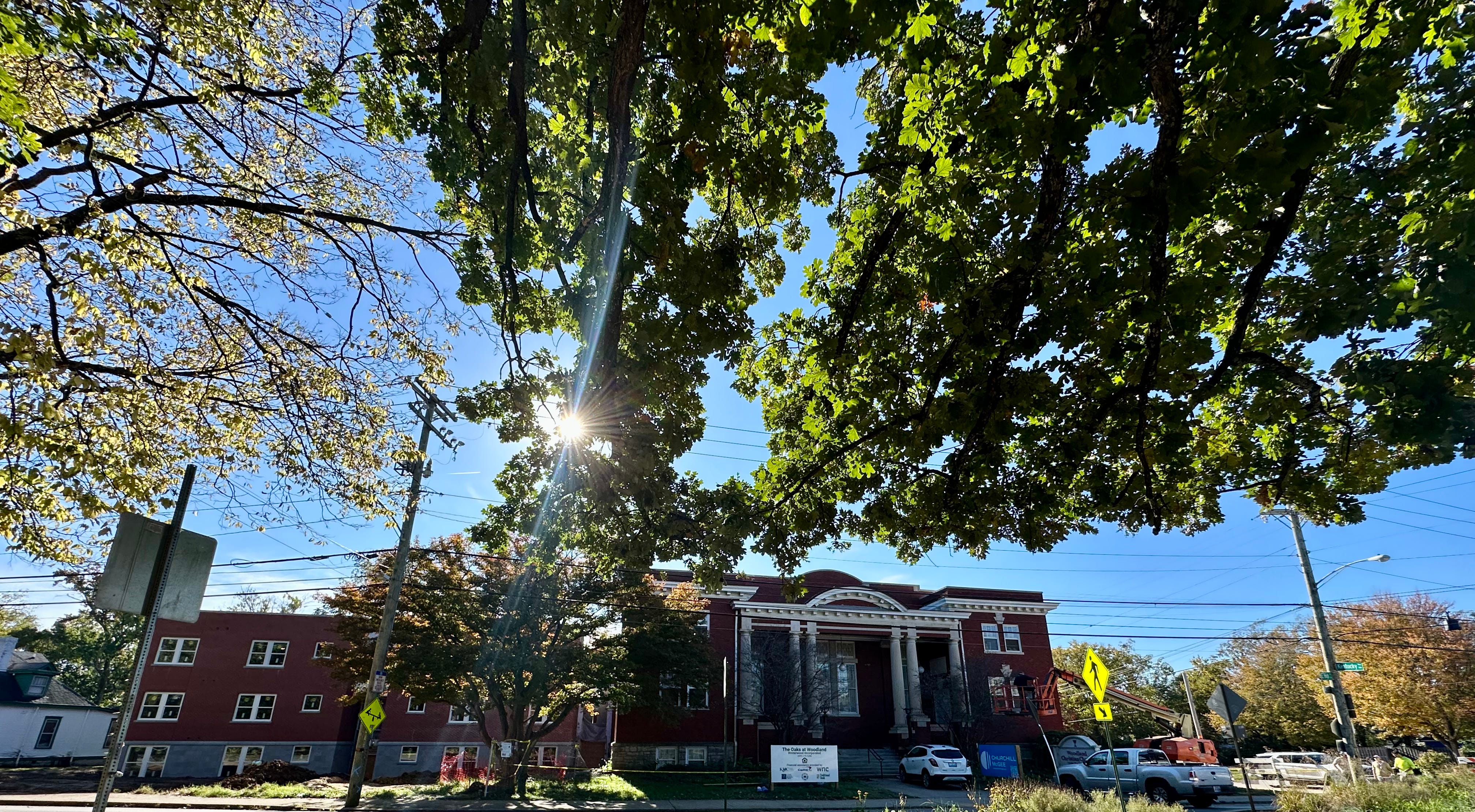
Then, in 2025, those deep roots bore new fruit. Woodland entered a groundbreaking partnership with Winterwood, a Kentucky-based housing developer, to restore the historic church building and create 38 units of affordable senior housing on church property. The $13 million investment is bringing the church fully up to modern accessibility and safety standards—while expanding its mission to serve Lexington’s growing senior population.
As one church member put it:
“We could not afford $1 million in repairs—but we could invest in hope.”
New Growth, Deep Roots
Today, Woodland Christian Church remains a living witness to the power of progressive faith. Its sanctuary—an elegant semicircular space reminiscent of Shakespearean theaters—will soon welcome new life as an accessible performance and worship venue, equipped for the next century of ministry, arts, and community gathering.
The story of Woodland is one of continuity and courage:
A church that opens its doors when others close theirs.
A congregation that stands for love, justice, and renewal.
A people rooted deeply in faith—always reaching toward new growth.
“New Growth Made Possible by Deep Roots.”
That has been Woodland’s story for more than 100 years—and by God’s grace, it continues today.